
When construction deadlines are tight and you need a building solution fast, fabric structures offer an incredible advantage over traditional construction methods. But just how quickly can these innovative buildings go up? The answer might surprise you.
The Speed Advantage: Fabric Structures vs. Traditional Construction
In today’s construction, conventional steel or concrete buildings typically require 8-12 months or more to complete, while fabric structures can be fully operational in just 2-8 weeks from groundbreaking to ribbon cutting. Additionally, for businesses needing immediate solutions, fabric building rentals offer even faster deployment. This dramatic difference in construction time stems from several key factors that make fabric building construction uniquely efficient.
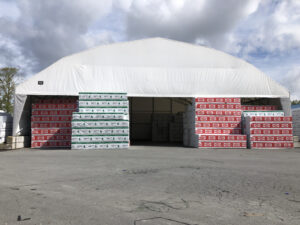
Why Fabric Structures Can Be Built So Much Faster
The secret to rapid fabric structure installation lies in the pre-engineered manufacturing approach. Unlike traditional construction where materials arrive raw and require extensive on-site fabrication, fabric buildings come with pre-cut fabric panels sized to exact specifications, pre-welded steel frames manufactured in controlled environments, and hardware and connection systems ready for immediate assembly. This eliminates the guesswork and reduces installation time significantly, as detailed installation guides accompany each structure to ensure smooth assembly.
Traditional buildings can weigh 150+ pounds per square foot, requiring heavy equipment, extensive foundations, and complex logistics. In stark contrast, fabric structures typically weigh just 3-5 pounds per square foot, which enables smaller installation crews of often just 4-6 people compared to 20+ for traditional construction. This lightweight design allows teams to use standard construction equipment instead of specialized heavy machinery, facilitating faster material handling and positioning while reducing transportation costs and complexity.
Foundation requirements also contribute significantly to the speed advantage of fabric structures. While conventional buildings often require extensive concrete foundations that need weeks to cure, many fabric structures only need simple concrete footings or piers, ground anchor systems for temporary structures, and minimal excavation and site preparation. Most importantly, there’s no waiting time for concrete curing in many applications, allowing construction to proceed immediately.
Real-World Fabric Structure Installation Timelines
Understanding actual project timelines helps illustrate the speed advantages of fabric construction across different scales of projects.
For small to medium structures under 10,000 square feet, the entire process typically unfolds over just 2-3 weeks. Site preparation usually takes 1-3 days, followed by foundation work requiring 2-5 days. Frame assembly occupies 3-7 days, with fabric installation completing the project in another 2-4 days.
Large structures ranging from 10,000 to 50,000 square feet require a more substantial timeline of 4-6 weeks total. Site preparation expands to 3-5 days, while foundation work takes 1-2 weeks. Frame assembly requires 1-2 weeks, and fabric installation typically completes within 3-7 days.
For extra-large facilities exceeding 50,000 square feet, the timeline extends to 6-8 weeks but remains remarkably fast for the scale. Site preparation takes 1-2 weeks, foundation work requires 2-3 weeks, frame assembly spans 2-4 weeks, and fabric installation finishes within 1-2 weeks.
Factors That Can Affect Fabric Structure Installation Speed
While fabric structures are inherently faster to build, several environmental and logistical factors can influence the exact timeline. Weather conditions play a significant role, as high winds can delay fabric installation, extreme temperatures may affect material handling, and heavy rain can slow foundation work. However, most fabric installation can proceed in moderate weather conditions that would halt traditional construction.
Site conditions also impact installation speed considerably. Level, well-drained sites install fastest, while rocky or unstable soil may require additional foundation work. Remote locations can slow material delivery, and utility availability affects overall project timing. However, even challenging sites typically see faster completion than traditional construction methods.
Permitting and approvals represent another variable in the timeline. Standard building permits usually take 2-6 weeks, while special use permits may require 6-12 weeks. Remote locations sometimes have faster approval processes, and pre-approved designs can significantly accelerate permitting by eliminating the review of custom engineering calculations.
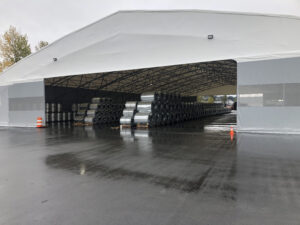
Industries Benefiting from Fast Fabric Structure Installation
The speed advantage of fabric buildings makes them ideal for numerous time-sensitive applications. In emergency and disaster response scenarios, relief shelters can be operational within 48-72 hours, providing critical infrastructure for emergency storage facilities and temporary medical facilities during health crises.
Industrial and commercial applications frequently leverage fabric structures for warehouse expansions to meet immediate storage needs, manufacturing facilities with rapid production ramp-up requirements, and equipment storage buildings for growing businesses that can’t wait months for traditional construction.
Sports and recreation facilities often need seasonal sports facilities that require quick installation before specific seasons, event venues with tight deadline requirements for upcoming competitions or shows, and training facilities for teams and athletic programs that need immediate solutions.
Agricultural applications particularly benefit from rapid installation timelines, as farmers need livestock shelters before harsh weather seasons, equipment storage before harvest periods, and hay and grain storage structures that must be ready for specific agricultural cycles.
Maximizing Your Fabric Structure Installation Speed
To achieve the fastest possible installation timeline, several pre-planning strategies prove essential. Choosing experienced installers with proven track records ensures efficient assembly, while ordering early guarantees material availability when needed. Preparing sites before delivery when possible eliminates delays, coordinating utilities in advance of installation prevents last-minute complications, and obtaining permits before materials arrive keeps the project moving smoothly.
Design considerations also significantly impact installation speed. Selecting standard sizes when possible ensures fastest delivery from manufacturers, while choosing proven designs that installers know well reduces assembly time. Minimizing custom features that require additional time keeps projects on schedule, and considering modular designs allows for future expansion without starting from scratch.
Cost Benefits of Faster Construction
The speed advantage of fabric structures translates directly into substantial cost savings across multiple areas. Reduced labor costs result from requiring smaller crews for shorter periods, needing less skilled labor for many installation tasks, and requiring reduced supervision and project management time.
Lower financing costs emerge from shorter construction loans that reduce interest expenses, faster return on investment with quicker occupancy, and reduced carrying costs during the construction period. Operational benefits include earlier revenue generation for commercial projects, reduced disruption to existing operations, and lower risk of weather-related delays and cost overruns.
Planning Your Fabric Structure Project
When planning a fabric structure installation, understanding the three main phases helps set realistic expectations. The design phase typically requires 2-4 weeks and includes initial consultation and needs assessment, custom design development if required, engineering calculations and drawings, and material specification and ordering.
The permitting phase spans 2-8 weeks depending on local requirements and includes building permit applications, zoning compliance verification, structural engineering approvals, and environmental impact assessments if required by local regulations.
The installation phase completes in 2-8 weeks and encompasses site preparation and foundation work, frame assembly and fabric installation, final inspections and approvals, and occupancy preparation to ensure the building is ready for immediate use.
The Future of Fast Construction
As construction technology continues to evolve, fabric structures are leading the way in rapid building solutions. Innovations in materials science, pre-fabrication techniques, and installation methods continue to reduce construction timelines while improving building performance, energy efficiency, and durability.
For projects where time is critical, fabric structures offer an unmatched combination of speed, cost-effectiveness, and performance. Whether you need emergency shelter, additional storage space, or a permanent facility with a tight deadline, fabric structures can deliver operational buildings in a fraction of the time required for traditional construction methods.
Frequently Asked Questions
How long does it take to install a 20,000 square foot fabric structure? A 20,000 square foot fabric structure typically takes 4-5 weeks from start to finish, including site preparation, foundation work, frame assembly, and fabric installation. This timeline can vary based on site conditions, weather, and the complexity of any custom features, but it’s significantly faster than the 6-12 months required for a comparable traditional building.
Can fabric structures be installed in winter weather? Yes, fabric structures can be installed in moderate winter conditions, though extreme cold, high winds, or heavy snow may cause delays. The lightweight materials and pre-engineered components actually make winter installation more feasible than traditional construction, as there’s no concrete curing time required and less heavy equipment needed on potentially challenging terrain.
Do I need special permits for fabric structure installation? Most fabric structures require standard building permits similar to traditional construction, though the approval process is often faster due to pre-engineered designs and proven structural calculations. Some jurisdictions have streamlined permitting for temporary or agricultural fabric structures, while permanent commercial buildings typically follow standard permitting procedures that usually take 2-6 weeks.
What’s the longest a fabric structure installation has taken? While most fabric structures install within 2-8 weeks, the longest installations typically involve very large facilities over 100,000 square feet with complex site conditions, custom engineering requirements, or challenging weather. Even these extreme cases rarely exceed 12-16 weeks, which is still significantly faster than traditional construction of comparable size.
Conclusion
Fabric structures can typically be erected in 2-8 weeks compared to 8-16 months for traditional buildings, representing up to a 75% reduction in construction time. This speed advantage comes from pre-engineered components, lightweight materials, simplified foundations, and streamlined installation processes that eliminate many of the time-consuming elements of traditional construction.
For businesses and organizations that need building solutions fast, fabric structures offer the perfect combination of rapid deployment, cost-effectiveness, and long-term performance. When time is money, fabric structures deliver both while providing the space and functionality needed for immediate operations.
Ready to explore how quickly a fabric structure can solve your building needs? Contact our experts for a customized timeline assessment and discover how fast your project can become reality.